
Heat pumps tend to fail quietly at first. One day everything feels normal, the next you notice the house is taking longer to warm up or cool down. Often, the problem is not the whole system, it is a small electrical part doing a big job behind the scenes. That part is the capacitor.
In Portland, Dallas, and surrounding Oregon communities, we see burnt or weak heat pump capacitors all the time. Damp weather, heavy seasonal use, and power fluctuations can all take a toll. The tricky part is that capacitor problems rarely announce themselves clearly, at least not right away. Knowing the early warning signs can help you avoid a full system breakdown and a very uncomfortable surprise.
Heat pump struggling to keep your home comfortable? If you suspect a weak capacitor or any other problem, reach out to Sunset for trusted heat pump repair services. Call us today at (503) 773-6695 or contact us online to schedule your next service.
What a Heat Pump Capacitor Actually Does
Before getting into symptoms, it helps to understand why capacitors matter so much. A capacitor stores and releases electrical energy to help motors start and run smoothly. In a heat pump, capacitors support critical components like the compressor, outdoor fan motor, and sometimes the indoor blower.
Think of a capacitor as a short burst of energy that gives motors the push they need to get moving. Once the motor is running, the capacitor helps keep power delivery steady. Without that support, motors struggle, overheat, or fail to start at all.
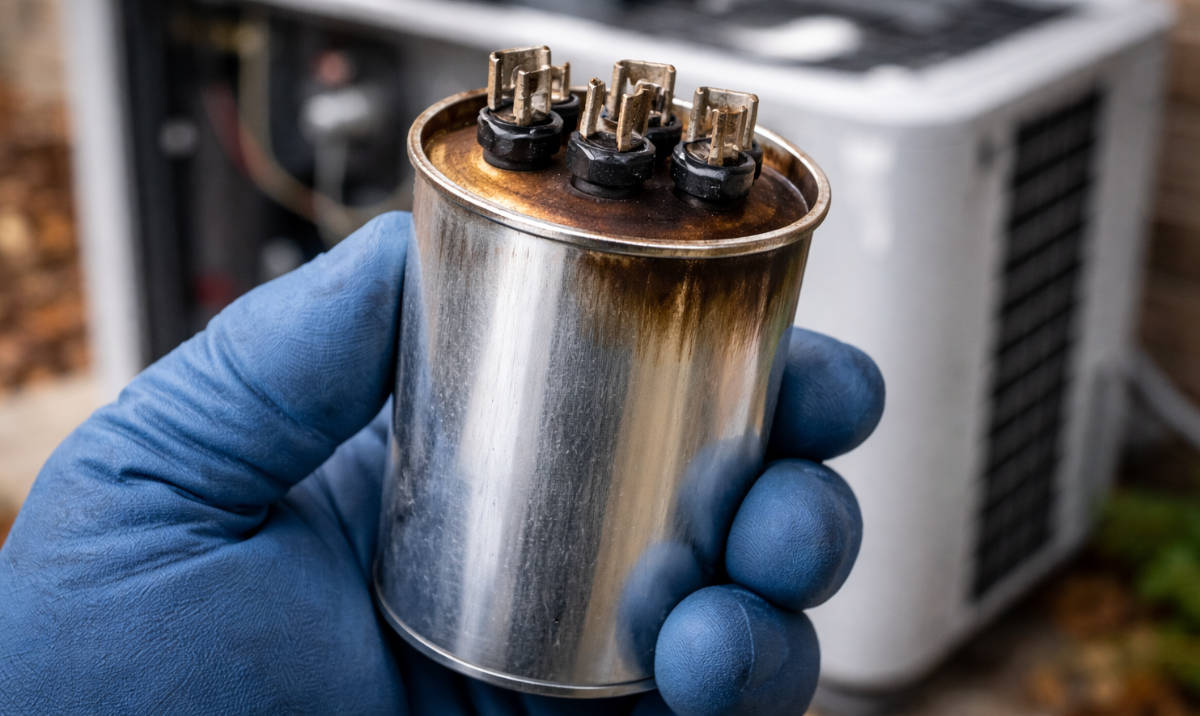
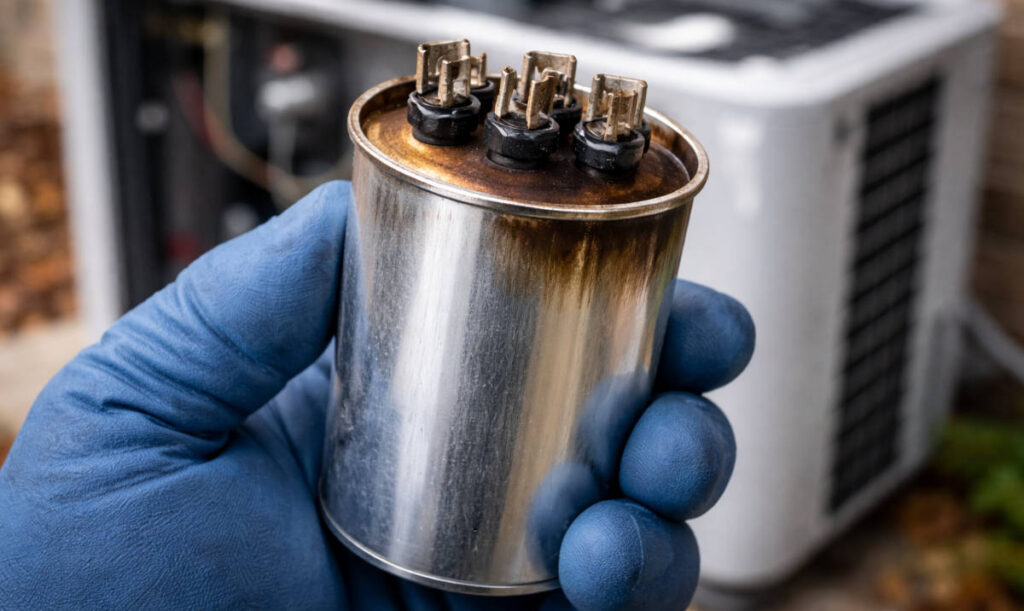
Most heat pumps have either a start capacitor, a run capacitor, or a dual run capacitor that handles multiple components. Over time, heat, vibration, and electrical stress wear them down. When a capacitor weakens or burns out completely, the system can no longer operate the way it should.
Slow or Failed System Startup
One of the earliest and most common signs of a weak capacitor is trouble starting up. You may hear the system try to turn on, but it hesitates or shuts back off. In some cases, the unit never starts at all.
This happens because the motor is not getting enough electrical boost to overcome resistance at startup. The system wants to run, but it cannot quite get there.
You might notice:
- A clicking or humming sound when the heat pump tries to start
- The outdoor fan not spinning even though the system is calling for heating or cooling
- The system turning on briefly, then shutting off
- Longer delays before warm or cool air begins flowing indoors
These symptoms often show up gradually. At first, the system may start after a few tries. Eventually, it stops starting altogether. Catching the issue early can prevent added strain on the compressor and fan motor.
Humming, Buzzing, or Unusual Noises
Sounds can tell you a lot about what is happening inside your heat pump. A burnt or failing capacitor often causes electrical noises that homeowners are not used to hearing.
A common complaint we hear is a loud humming or buzzing coming from the outdoor unit. This usually means the motor is receiving power but cannot start turning. The capacitor cannot deliver the energy it needs, so the motor just sits there and hums.
Pay attention to noises like:
- Loud humming from the outdoor unit when it should be running
- Buzzing sounds that stop when the system shuts off
- Repeated clicking followed by silence
- A fan blade that needs a manual push to start spinning
That last one is especially telling. If the fan spins when pushed with a stick (power off first), the capacitor is almost certainly weak or failed. This is not something to test casually, as capacitors can hold a dangerous electrical charge.
Weak Heating or Cooling Performance
Sometimes the system still runs, but comfort drops noticeably. A weak capacitor can allow motors to run, just not efficiently. That reduced performance often shows up as uneven temperatures or longer run times.
You may feel like your heat pump is working harder but delivering less. Rooms take longer to heat or cool, and the system seems to run nonstop during peak seasons.
Signs of performance issues include:
- Lukewarm air coming from vents when stronger output is expected
- Inconsistent temperatures from room to room
- Longer heating or cooling cycles
- Rising energy bills without a clear explanation
When motors struggle, they draw more electricity. That extra draw increases operating costs and accelerates wear on other components. What starts as a capacitor issue can turn into a motor or compressor failure if ignored.
Tripped Breakers or Electrical Smells
A burnt capacitor does not always fail quietly. In some cases, it can cause electrical symptoms that feel more urgent. Tripped breakers are a big red flag, especially if they reset but trip again when the system starts.
As capacitors degrade, they can short internally or cause motors to pull excessive current. Your electrical system responds by cutting power to prevent damage or fire risk.
Watch for warning signs such as:
- Circuit breakers tripping when the heat pump turns on
- A faint burning or metallic smell near the outdoor unit
- Visible bulging or leaking oil on the capacitor casing
- Scorch marks or discoloration near electrical panels inside the unit
If you notice burning smells or repeated breaker trips, shut the system off and call for service. Electrical issues should never be ignored, especially in older systems or during heavy seasonal use.
Why Capacitors Fail More Often in Oregon Homes
Capacitors are designed to wear out over time, but certain conditions speed up that process. In Oregon, we see a few patterns that contribute to early capacitor failure.
Moisture is a big one. Damp air can work its way into outdoor units, causing corrosion on electrical connections. Temperature swings also matter. Cold mornings followed by milder afternoons create expansion and contraction that stresses components.
Other contributing factors include:
- Power surges or unstable voltage
- Extended run times during cold snaps or heat waves
- Poor airflow that causes overheating
- Age, most capacitors last 5 to 10 years at best
Even well maintained heat pumps eventually need capacitor replacement. Regular tune ups help catch weakening capacitors before they fail completely, saving you from sudden breakdowns.
Why Replacing a Capacitor Is Not a DIY Job
Capacitors may look simple, but they are not safe to handle without training. They store electrical energy and can deliver a serious shock even when the system is powered off.
Beyond safety concerns, correct sizing matters. Installing the wrong capacitor can damage motors or cause repeated failures. Every heat pump is designed for specific voltage and microfarad ratings.
A professional technician will:
- Safely discharge the old capacitor
- Confirm the correct replacement rating
- Inspect related components for heat or electrical damage
- Test system operation after installation
At Sunset Heating, Cooling, Electrical & Plumbing, we often replace capacitors as part of a larger inspection. That way, we make sure the failure did not cause or hide other problems that could shorten your system’s life.
Get Trusted Heat Pump Repair & Maintenance From Sunset!
If your heat pump is humming, struggling to start, or not keeping your home comfortable, a weak or burnt capacitor could be the reason. These issues rarely fix themselves, and waiting usually leads to bigger repairs.
Sunset Heating, Cooling, Electrical & Plumbing has been serving Oregon homeowners for over 100 years, and capacitor problems are something we handle every day. Our technicians know what to look for, how to fix it safely, and how to protect the rest of your system in the process.
If you are in Portland, Dallas, or nearby areas and suspect capacitor trouble, call Sunset at (503) 773-6695 for trusted heating or air conditioning services. We will restore reliable performance, improve efficiency, and help you avoid a full system failure when you need comfort the most.