Most of us don’t think twice about outlets and switches. They’re just there, quietly doing their job day after day. But if your home is older, especially one built several decades ago, those small electrical components could be hiding some serious risks. Old outlets and switches age just like anything else, and when they do, safety often takes a hit.
We’ve seen it plenty of times across Oregon homes. A flickering light here, a loose outlet there, maybe a switch that feels warm to the touch. These things are easy to ignore until they’re not. Understanding why outdated electrical components are dangerous can help you protect your home, your family, and your peace of mind.
For professional outlet and switch replacement or new installations in Portland, Dallas, or the nearby Oregon areas, contact Sunset Heating, Cooling, Electrical & Plumbing or call us at 503-773-6695.
Why Outlets and Switches Wear Out Over Time
Electrical outlets and switches are used constantly, often multiple times a day, every single day. Over the years, that wear adds up. Internal connections loosen, metal components corrode, and insulation can become brittle or cracked. Even if everything looks fine on the outside, the inside can tell a very different story.
Older homes were also wired for a completely different lifestyle. Decades ago, houses weren’t expected to power multiple TVs, computers, kitchen gadgets, and charging stations all at once. That extra demand puts stress on outlets and switches that were never designed to handle it.
Common reasons outlets and switches wear out include:
- Years of repeated plugging and unplugging
- Heat buildup from heavy electrical loads
- Moisture exposure in kitchens, bathrooms, or basements
- Outdated materials that break down over time
- Rodents or other animal interactions
When components wear out, they don’t usually fail all at once. They weaken slowly, which makes the danger harder to spot.
Fire Hazards Linked to Outdated Electrical Components
One of the biggest risks of old outlets and switches is fire. Loose connections create resistance, resistance creates heat, and heat can lead to sparks. All it takes is the right conditions for that spark to ignite surrounding materials inside your walls.
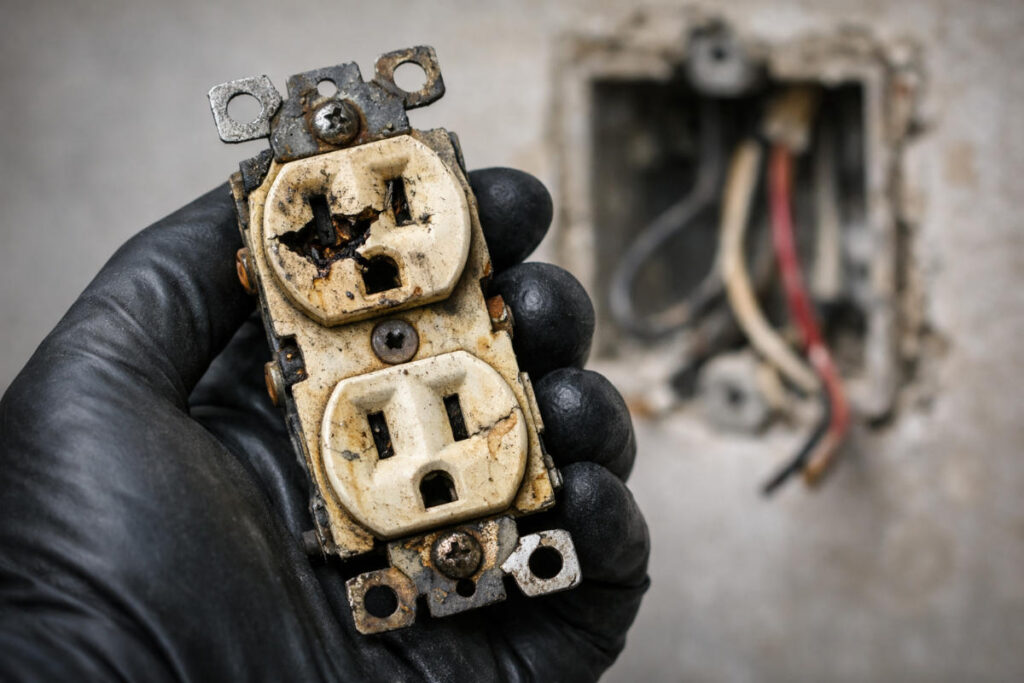
We’ve responded to calls where homeowners noticed a faint burning smell or discoloration around an outlet. In many cases, those signs show up right before a serious problem. Electrical fires often start silently and spread fast, especially behind walls where they’re harder to detect.
Warning signs that point to fire risk include:
- Warm or hot outlets and switches
- Buzzing or crackling sounds
- Scorch marks or discoloration
- Breakers tripping without a clear reason
- Flickering lights
Ignoring these signs can turn a small repair into a major emergency. Updating old components is one of the simplest ways to reduce the risk of an electrical fire.
Shock Risks and Everyday Safety Concerns
Fire isn’t the only concern. Old outlets and switches can also increase the risk of electrical shock. As internal parts loosen or degrade, they may expose live wiring or fail to properly contain electrical current. This can be especially dangerous for children, pets, and anyone using appliances near water.
Two-prong outlets are a common issue in older homes. They lack grounding, which means electricity has no safe path to travel if something goes wrong. That increases the chance of shock and equipment damage. Loose switches can also give a mild shock when turned on or off, which is never something to brush off.
Situations that increase shock risk include:
- Outlets without grounding: Ungrounded outlets lack a safe path for excess electricity, increasing the risk of electric shock, appliance damage, and electrical fires during power surges or equipment failures.
- Cracked or brittle outlet covers: Damaged outlet covers can expose live electrical parts, making it easier for fingers, dust, or moisture to come into contact with wiring and create safety hazards.
- Switches that spark when flipped: Sparking switches often indicate loose wiring or worn internal contacts, which can generate heat, cause arcing, and increase the chance of electrical fires over time.
- Moisture near outdated electrical components: Water and electricity don’t mix, and moisture near old outlets or switches can lead to corrosion, short circuits, shock risks, and sudden electrical failures.
Electrical shocks don’t have to be severe to be dangerous. Even minor shocks are a sign that something isn’t right.
How Old Wiring Standards Create Modern Problems
Electrical codes have changed a lot over the years, and for good reason. Many older outlets and switches were installed before modern safety standards existed. That means they may lack features we now rely on for protection.
GFCI outlets, for example, are designed to shut off power instantly if they detect an imbalance. AFCI protection helps prevent fires caused by arc faults. Older homes often don’t have these protections in place, especially in high-risk areas like kitchens, bathrooms, garages, and laundry rooms.
Common code-related issues in older homes include:
- No GFCI outlets near water sources: Without GFCI protection, electrical faults near sinks or tubs can quickly lead to dangerous shock situations.
- No AFCI protection in living areas: Missing AFCI protection increases the risk of hidden arc faults that can spark electrical fires behind walls.
- Overloaded circuits tied to outdated outlets: Older outlets may struggle with modern power demands, causing overheating, frequent breaker trips, and wiring stress.
- Improper grounding or none at all: Poor grounding leaves electricity without a safe escape path, raising shock risks and damaging sensitive electronics.
- Loose or worn outlet connections: Internal connections loosen over time, creating heat buildup, arcing, and a higher chance of electrical fires.
- Outlets that feel warm to the touch: Warm outlets often signal internal resistance or failing components that need immediate professional attention.
While a home might have passed inspection decades ago, that doesn’t mean it meets today’s safety expectations. Updating outlets and switches helps bring your home closer to modern standards.
The Impact on Your Appliances and Electronics
Old outlets and switches don’t just affect safety, they can also take a toll on your electronics. Inconsistent power flow, loose connections, and lack of grounding can damage sensitive devices over time. You might notice chargers failing early or appliances behaving unpredictably.
Power surges are another concern. Without proper surge protection and modern outlets, voltage spikes can travel straight to your electronics. That damage isn’t always immediate. Sometimes it shortens the lifespan of devices quietly until they fail unexpectedly.
Problems outdated outlets can cause for electronics include:
- Inconsistent power delivery
- Increased wear on appliance components
- Higher risk of surge damage
- Frequent breaker trips tied to faulty connections
Replacing old outlets and switches can help protect the investment you’ve made in your home electronics and appliances. Additionally, installing whole-house surge protection adds an extra layer of defense against sudden voltage spikes caused by lightning, power outages, or utility grid fluctuations, helping prevent costly damage to sensitive devices while improving the overall safety and reliability of your home’s electrical system.
Signs It’s Time to Replace Outlets and Switches
Many homeowners assume electrical updates only happen during major remodels, but that’s not always the case. There are clear signs that indicate it’s time to take action, even if everything seems to be working.
Some of these signs are easy to miss or get used to over time. That’s why it helps to know what to watch for and take concerns seriously when they pop up.
Indicators it may be time for replacement include:
- Loose plugs that won’t stay in place
- Switches that feel spongy or stiff
- Frequent breaker trips tied to one area
- Outlets that stop working intermittently
If your home is over 30 years old and still has many original outlets and switches, an electrical inspection is a smart move. It’s better to replace components on your terms than during an emergency.
Why Professional Replacement Matters
Swapping an outlet or switch might seem simple, but electrical work is rarely as straightforward as it looks. Older homes often have hidden issues like brittle wiring, improper grounding, or overloaded circuits. Without the right experience, it’s easy to miss something important.
A licensed electrician doesn’t just replace parts, they evaluate the surrounding system. That means checking connections, load capacity, and safety features to make sure everything works together properly. It’s about more than function, it’s about long-term safety.
Professional electrical service ensures:
- Proper grounding and secure connections
- Compliance with current electrical codes
- Reduced risk of fire or shock
- Peace of mind knowing the job was done right
When it comes to electricity, cutting corners is never worth the risk.
Get Trusted Electrical Outlet & Switch Updates With Sunset!
Old outlets and switches may seem harmless, but they can quietly put your home at risk. At Sunset, we help homeowners identify and fix electrical problems before they turn into something bigger. Our licensed electricians handle outlet and switch replacements with safety, care, and attention to detail.
We’ve been serving Oregon communities for over 100 years, and we know what to look for in older homes. If you’ve noticed warning signs or simply want peace of mind, we’re here to help. Reach out to Sunset Heating, Cooling, Electrical & Plumbing today and take the first step toward a safer, more reliable electrical system in your home.