
Cold Oregon mornings have a way of revealing problems fast. One day your heat pump is humming along, the next it looks like it belongs in a freezer. A heat pump that will not defrost is more than an inconvenience, it can leave your home chilly, drive up energy bills, and strain the system.
We see this a lot around Portland, Dallas, and nearby areas, especially during damp winter weather. Heat pumps are built to handle cold, but when the defrost cycle fails, ice can take over quickly. The good news is that many defrost problems have clear causes, and once you know what to look for, the fix is often straightforward.
Problems with a "frosty" heat pump? If you're in Portland or Dallas, Oregon, reach out to Sunset for dependable heat pump repair services. Call us 24/7 at (503) 773-6695 or contact us online to schedule your next service.
How the Heat Pump Defrost Cycle Is Supposed to Work
Before we talk about what goes wrong, it helps to understand what “normal” looks like. In heating mode, a heat pump pulls warmth from outdoor air, even when it feels cold outside. As it does this, moisture in the air can freeze on the outdoor coil. That part is expected.
To deal with that frost, your heat pump has a defrost cycle. Periodically, the system temporarily switches to cooling mode to warm up the outdoor coil and melt the ice. You might notice steam rising from the unit or a brief pause in warm air indoors. That is all part of the plan.
When everything is working right, the defrost cycle keeps ice from building up too much. Problems start when the system never enters defrost, stays in defrost too long, or cannot clear the ice completely. Over time, the coil becomes blocked, airflow drops, and heating performance suffers.
Signs Your Heat Pump Is Not Defrosting Properly
Some defrost issues are obvious, others sneak up slowly. Knowing the warning signs can help you act before real damage is done.
Common symptoms we hear homeowners describe include:
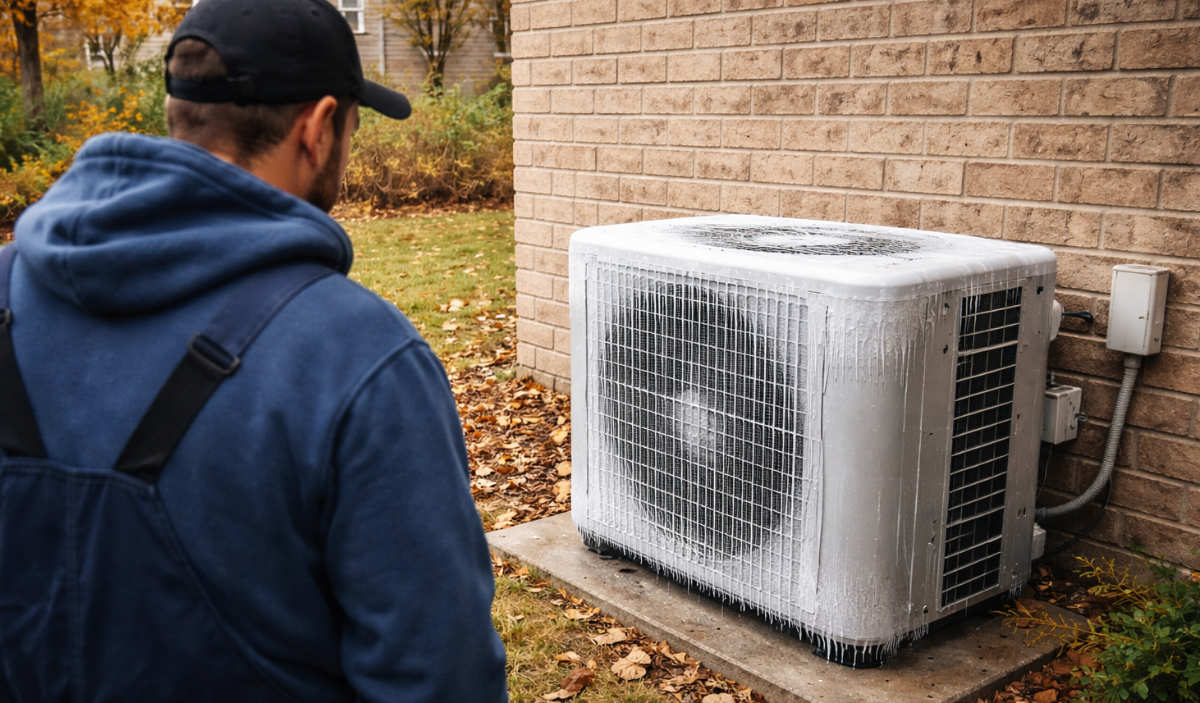
- Thick ice buildup on the outdoor unit, not just a light frost
- Reduced airflow or cold air coming from indoor vents
- The system running constantly but struggling to keep up
- Unusual noises from the outdoor unit, like grinding or hissing
- Higher-than-normal electric bills during cold weather
If you see ice covering most of the outdoor coil or forming solid blocks, that is not normal. A little frost is fine, but heavy ice means the defrost system is not doing its job.
Faulty Defrost Control Board or Sensor
One of the most common causes of defrost failure is a problem with the defrost control board or sensors. These components tell the system when to start and stop the defrost cycle. If they are not reading conditions correctly, the heat pump may never defrost when it should.
Defrost sensors can fail due to age, corrosion, or wiring issues. Control boards can suffer from electrical problems or manufacturing defects. When this happens, the system may misjudge outdoor temperatures or coil conditions.
Typical issues related to controls include:
- Defrost cycle never activates, even with heavy ice present
- Defrost cycle runs too often or at the wrong times
- System gets stuck in defrost mode and blows cold air indoors
These parts are not DIY friendly. Testing them requires electrical knowledge and proper tools. A trained technician can quickly pinpoint whether a sensor or control board is to blame and replace it before further damage occurs.
Restricted Airflow Around the Outdoor Unit
Sometimes the issue is not electrical at all. Restricted airflow can make defrost problems much worse. The outdoor unit needs clear space to pull in air and release heat during the defrost cycle.
In Oregon, we see outdoor units surrounded by wet leaves, moss, dirt, and even snow piles. Over time, debris can clog the coil or block airflow completely.
Check for these common airflow problems:
- Leaves, grass, or dirt packed into the outdoor coil
- Shrubs or fencing too close to the unit
- Snow piled up against or on top of the heat pump
- Damaged or bent coil fins restricting airflow
Keeping at least two feet of clearance around the unit helps a lot. Gently rinsing the coil with a garden hose can also remove surface debris. Just be sure the power is off before you do any cleaning. If the coil is heavily clogged or damaged, professional cleaning is the safer option.
Low Refrigerant Levels and Their Impact on Defrosting
Low refrigerant is another frequent culprit behind defrost issues. When refrigerant levels drop due to a leak, the system cannot absorb and move heat efficiently. That makes the outdoor coil colder than it should be, leading to excessive ice buildup.
A heat pump with low refrigerant may still run, but it struggles. The defrost cycle might activate, yet fail to fully melt the ice. Over time, the problem compounds.
Signs of low refrigerant include:
- Ice forming quickly after defrost
- Longer run times with poor heating results
- Hissing or bubbling sounds near the outdoor unit
- Noticeable drop in comfort during cold weather
Refrigerant issues always require professional service. Topping off refrigerant without fixing the leak is a temporary bandage, not a solution. A licensed technician can locate the leak, make repairs, and restore proper refrigerant levels so defrosting works as designed.
Thermostat and System Settings That Cause Confusion
Believe it or not, thermostat settings can sometimes contribute to defrost complaints. While the thermostat does not control defrost directly, incorrect settings can make it seem like the system is not working.
For example, switching frequently between heating modes or using emergency heat incorrectly can mask or worsen underlying issues. Smart thermostats, while convenient, can also create problems if not configured properly for heat pump operation.
Things we often check include:
- Thermostat set to the correct heat pump mode
- Emergency heat not left on unnecessarily
- Programming that matches your daily schedule
- Compatibility between the thermostat and the heat pump system
If your thermostat was recently replaced or updated, it is worth double-checking the setup. A professional inspection can confirm everything is communicating correctly and ruling out control issues tied to settings.
When Ice Buildup Becomes a Bigger Risk
Ignoring defrost problems can lead to more than cold rooms. Thick ice puts stress on components like the fan motor and compressor. As the system works harder to compensate, energy use climbs and wear accelerates.
In severe cases, ice can damage the coil or cause water to refreeze where it should not, leading to cracked parts or electrical hazards. What starts as a defrost issue can turn into a major repair if left unchecked.
That is why we always recommend addressing ice buildup early. Even if the system still runs, heavy ice is a sign something is off. Quick action usually means a simpler, less expensive fix.
Sunset Heating, Cooling, Electrical & Plumbing Can Get Your Heat Pump Back on Track
If your heat pump will not defrost and winter comfort is slipping, this is where Sunset Heating, Cooling, Electrical & Plumbing steps in. We have spent over 100 years helping Oregon homeowners stay warm through wet, cold seasons, and we know how local weather pushes heat pumps to their limits.
Our technicians are trained to diagnose defrost problems fast, whether it is a sensor issue, airflow restriction, refrigerant leak, or control malfunction. We believe in upfront pricing, same-day service, and fixing the root cause, not just the symptom.
If you are in Portland, Dallas, or anywhere nearby and tired of staring at an ice-covered heat pump, call Sunset at (503) 773-6695 for fast and reliable heating services. We will help you get reliable heat back, protect your system, and keep your home comfortable all winter long.